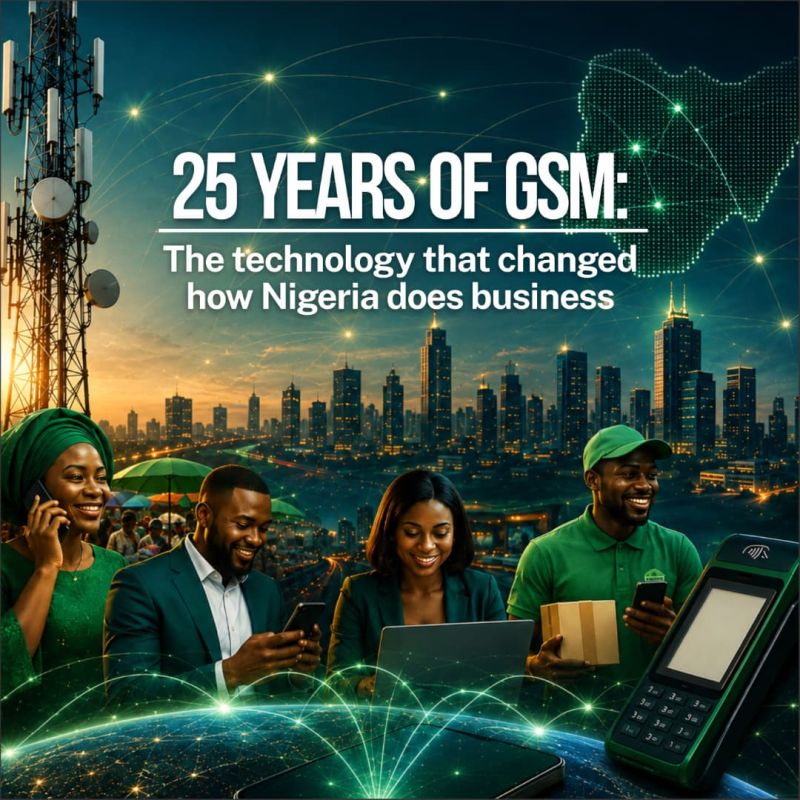
25 Years of GSM: The Technology That Changed How Nigeria Does Business
8 September 2026
There was a time in Nigeria when being able to reach someone was not something you could take for granted.
A phone call could involve a trip to a business centre. A business owner might have to wait for a customer to come around physically. A family member in another city could remain out of reach for days. Communication had a cost, and distance had a way of making itself felt.
Then, 25 years ago, the mobile phone began to change all of that.
Nigeria's GSM journey officially began in 2001, and what followed was more than a telecommunications revolution. At first, the excitement was simply being able to call people from almost anywhere. But Nigerians quickly found new uses for this newfound accessibility.
A trader could call a supplier before making a journey. A customer could contact a business owner directly. A driver could receive instructions on the road. Someone looking for work could be reached without staying beside a fixed telephone.
The mobile phone was quietly removing barriers that businesses and individuals had simply learned to live with. Then the internet arrived on those same phones, and the possibilities multiplied.
The phone that once helped a customer call a shop could now become the shop itself.
A small business could display products online without renting a physical space. Customers could discover brands they had never heard of. Payments could happen without cash changing hands. People could work, advertise, sell, learn and communicate with audiences far beyond their immediate surroundings.
The rise of fintech is one of the clearest examples. As millions of Nigerians became increasingly connected, managing money through a mobile device became less foreign. Digital banking, transfers and online payments began moving closer to everyday life.
Commerce immediately jumped on this train.
Today, someone can run a business almost entirely from a phone. A fashion entrepreneur can market a collection on social media, receive an order through a messaging app, collect payment digitally and arrange delivery, all without the customer stepping into a physical shop.
Twenty-five years ago, that would have sounded like a dream.
And the economic significance is difficult to ignore. Mobile technologies and services contributed an estimated $240 billion to Africa's economy in 2025, according to the GSMA.
But perhaps the most interesting part of the story is not the size of the industry. It is what Nigerians have done with the access it created.
Technology arrived, but people adapted it to their needs. Entrepreneurs found customers. Businesses found new markets. Young people found ways to earn. Financial services found new channels. Entire business models emerged around the simple ability to connect people faster.
Exemplar Projects Insights
Technology changes the world when people stop using it merely to connect and start using it to create.
More articles


SWAVE Money
Ready to bank smarter?
Zero-data banking, instant transfers, and real rewards. Download SWAVE Money today.