
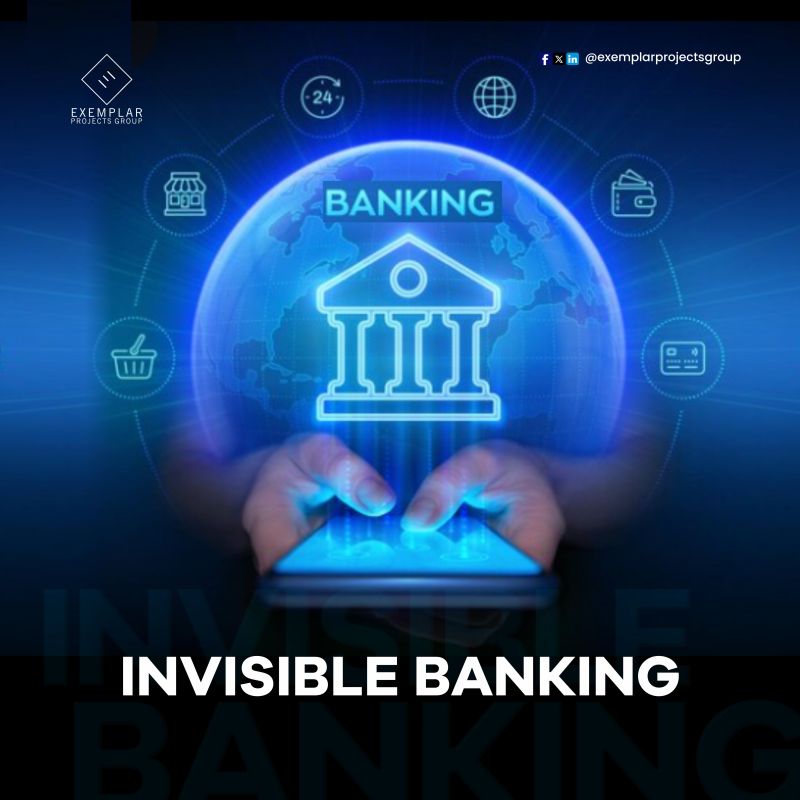
Embedded Finance: When Banking Becomes Invisible Infrastructure
22 April 2026
For a long time, banking had a visible identity. It lived in branches, websites, and dedicated apps where users deliberately went to perform financial actions. Even as digital banking evolved, the idea of "going to bank" still existed — only in a more convenient form. But that idea is now fading.
A new shift is unfolding quietly. Finance is no longer a destination — it is becoming infrastructure. Across e-commerce platforms, ride-hailing apps, digital marketplaces, and even social ecosystems, financial services are no longer separate experiences. They are being absorbed directly into the platforms people already use every day.
This evolution is best understood through the rise of Embedded Finance, where payments, lending, insurance, and savings are built into non-financial products rather than offered as standalone services. Research and market projections from McKinsey & Company suggest that this shift will unlock trillions in value globally, as financial services move closer to where real economic activity happens.
What makes this transition different from previous fintech waves is not just efficiency, but invisibility. Users are no longer consciously "making payments" — they are simply completing purchases. Riders are not requesting payouts — they are being settled automatically. Merchants are not applying for financial services — they are being evaluated and approved within the platforms they already operate on.
In markets like Nigeria and other fast-digitizing economies, this shift is even more pronounced. Many users are experiencing structured financial systems for the first time not through traditional banks, but through digital platforms that quietly integrate banking functions into everyday interactions.
But this transformation raises a deeper structural question. If finance disappears into platforms, what happens to the bank itself? Is it still the primary relationship holder, or has it become a backend infrastructure provider powering experiences it no longer owns?
The answer is still unfolding, but the direction is becoming clearer. Traditional financial institutions are gradually shifting from customer-facing entities to invisible rails behind digital ecosystems. Meanwhile, fintech platforms are positioning themselves as the primary interface between users and money.
What is emerging is not just a more efficient financial system, but a fundamentally different one. A system where banking is no longer a place you visit, but a layer embedded into everything you do.
And in that world, the most powerful financial players may no longer be seen at all.
More articles
 Fintech
17 Apr 2026
Security as a Feature: Why the Next Fintech Edge Is Trust, Not Speed
 Business Strategy
21 Aug 2026
Convenience Is the New Currency
 Business Strategy
22 Sept 2026
Africa Has the Resources, But Who Captures the Value
SWAVE Money
Ready to bank smarter?
Zero-data banking, instant transfers, and real rewards. Download SWAVE Money today.