The Democratization of Investment: Access, Risk, and the New Wealth Divide
8 March 2026
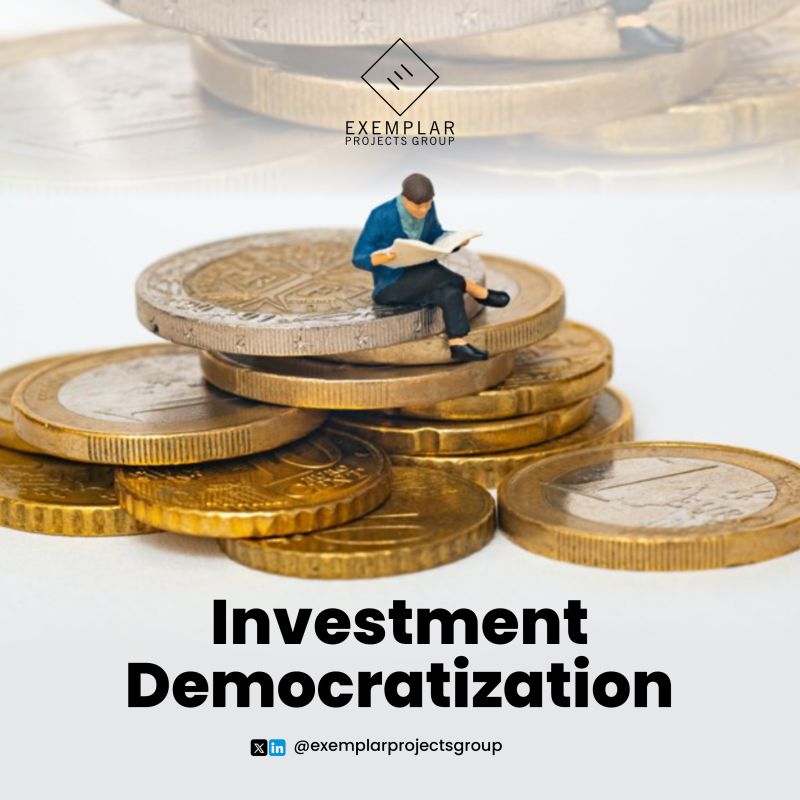
For decades, investing was an exclusive club. High-performing assets, private equity, and institutional opportunities were reserved for wealthy individuals and large firms, while ordinary savers were left with savings accounts, basic equities, and pension funds that offered modest returns. That architecture is quietly collapsing as technology reshapes access to capital and wealth creation.
Platforms like Robinhood and Wealthfront in the United States, and emerging African alternatives such as Risevest and Bamboo, are breaking barriers by enabling individuals to invest with just a few taps on a smartphone. Real estate, once the domain of wealthy property owners, can now be fractionally owned. Private companies, traditionally reachable only by venture capital firms, are opening doors to retail investors through crowdfunding. Investing has shifted from a privilege of few to a product available to many — and this change is structural rather than superficial.
The forces behind this transformation are technology and a growing desire for participation. Fintech platforms automate everything from onboarding to execution at near-zero marginal cost, removing the friction that kept millions on the sidelines. At the same time, individuals who have watched asset prices soar faster than wages are eager to participate in wealth creation rather than remain passive observers.
Yet access alone does not guarantee success. Research from the Organisation for Economic Co-operation and Development (OECD) and leading academic studies reveal that retail investors using app-based platforms often trade more frequently, take higher risks, and exhibit stronger cognitive biases than institutional investors.
This pattern highlights a deeper truth: investment innovation amplifies outcomes. It magnifies the gains for disciplined investors but also the losses for the uninformed. Platforms that provide access without education may scale quickly, yet they also cultivate fragile user bases prone to volatility. Sustainable growth belongs to businesses that embed financial literacy into the user journey, making knowledge part of the investment product rather than an optional add-on.
Regulators face a similar challenge. Overregulation can stifle innovation, while under-regulation can expose vulnerable investors to poorly understood risks. The goal is not to slow innovation but to shape it — pairing inclusion with resilience and participation with understanding.
Ultimately, the new wealth divide is not between those who can invest and those who cannot, but between those who understand risk and those who do not. Access alone is no longer enough. In the new investment landscape, the measure of success will be determined by who can navigate markets wisely, who can balance opportunity with discipline, and who can turn access into sustainable wealth.
More articles
 Fintech
17 Apr 2026
Security as a Feature: Why the Next Fintech Edge Is Trust, Not Speed
 Finance
26 Mar 2026
Nigeria's Banking Capital Race: What Recapitalization Really Means for the Economy
 Finance
7 Mar 2026
Rethinking Safe Havens: How Smart Investors Are Building Protection in Uncertain Markets
SWAVE Money
Ready to bank smarter?
Zero-data banking, instant transfers, and real rewards. Download SWAVE Money today.